Replaced expiring email links with a centralized, role-based SharePoint hub for a healthcare nonprofit, cutting 12% of manual provisioning.
Product
B2B web app
Skills
Product design, Stakeholder management, User research & testing
Role
Product Designer
Team
UX Team, Operation Team, Development Team, and other Program Team directors
Outcome
12%
34%
80%
Context
📈 Business Needs
As PCC's partner network grew, they needed a secure, cost-effective way to keep file exchange efficient without scaling up manual admin work.
❓Problem to Solve
Insurance and program coordinatorsspent hours every week manually managing access and chasing files, and external partners regularly overwrote critical data because there were no real access controls.
📍Project Goal
Build a tool that enables healthcare workers to exchange healthcare files and data within regulatory compliance, with minimal manual work and licensing cost.
🪨 Unique Challenge
Integrate within existing SharePoint ecosystem while complying with HIPAA and other healthcare data access regulations.
Process
Research: Identifying the Access Problem
I ran 6 stakeholder interviews across Operations and 5 Program teams, which revealed 2 persona and 3 main pain points for current workflow:

Program Coordinator
"it's a little bit harder to get those permissions... they are blocked from our Sharepoint for some reason."

Hospital Staff
"By the time I click the link, it's already expired… I have to email them again just to get access."
Internal staff waste significant time sending emails with manually-created access links that external partners frequently lose in their inboxes.
External partners face access friction because SharePoint's default security configurations frequently lock them out.
Lacking strict data isolation, external partners accidentally overwrite critical documents, breaking version control.
Ideation: An Automated Shared Space
I proposed building a shared space as client portal, replacing manual link creation with a persistent, permission-based area partners could return to.

Finding the Middle Ground Within Constraints
I initially proposed a third-party client portal for full flexibility, but healthcare data regulations and technical limits meant it had to live inside SharePoint, so I pivoted the concept to work within SharePoint's existing affordances and supported features.

Placing the Shared Space Within Healthcare Data Constraints
Initially we planned to put the centralized hub inside PCC's internal SharePoint structure, but the need to limit healthcare data access permissions led us to work with stakeholders and pivot the scope to a separate, secure portal focused solely on external partner access.

Designing the Information Architecture
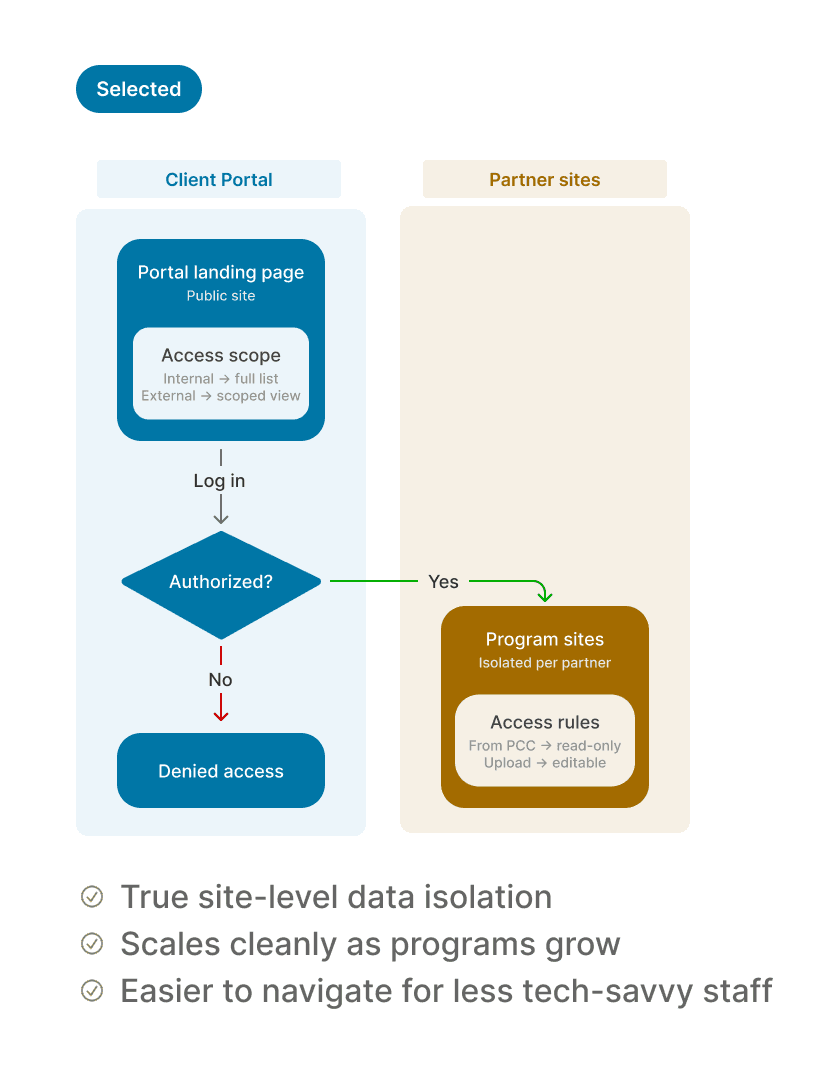
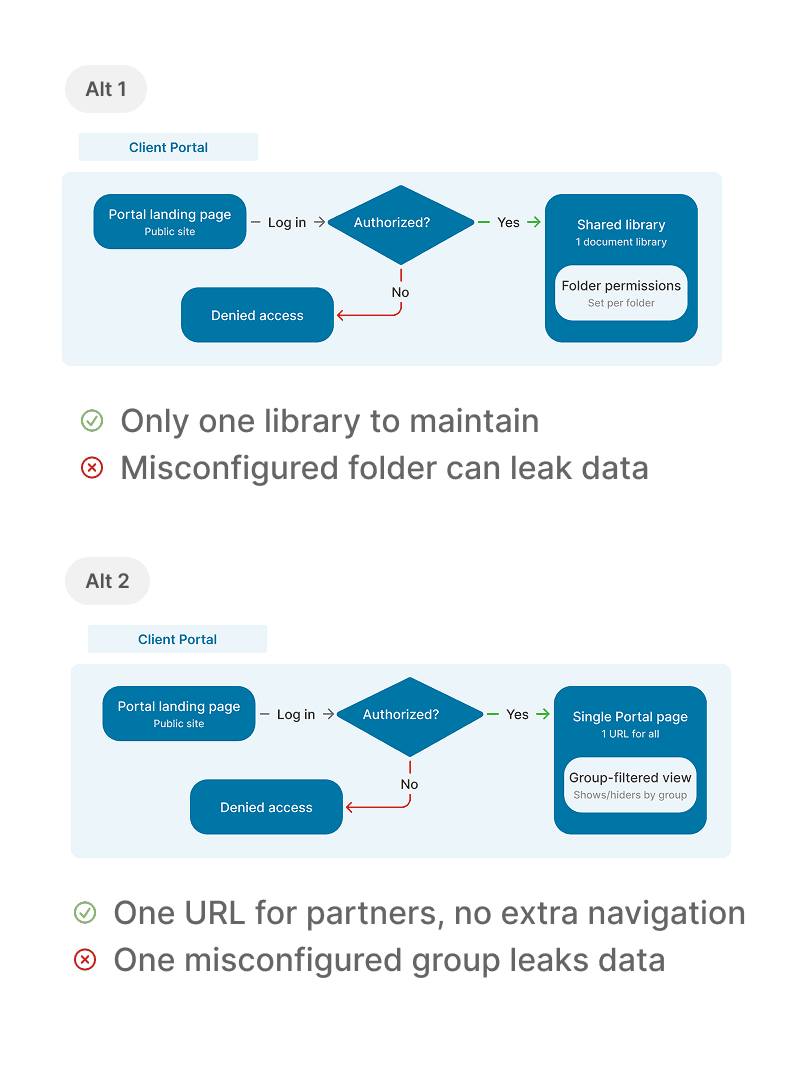
I designed a central portal that routes each partner to their own isolated site, instead of one shared space for everyone, a bit more setup upfront, but far less ongoing maintenance, fixing the manual access problem research uncovered.
Organizing Menu by Task, Not Department
For the internal staff view, I chose to organize menu items by task type, like "Central Distribution" and "Master Inbox", rather than by internal department structure.

User Testing and Iteration
I built mid-fidelity Figma wireframes, used Claude to make them clickable, and ran 5 moderated usability sessions with internal healthcare staff, iterating on the design and validating the concept with the legal team before handoff.
Finding 1: The Portal Entrance Needed Role-Based Views to Prevent Cross-Partner Exposure

Finding 2: Program Managers wanted self-serve subfolder structures instead of one-size-fits-all sections


Final Solution
A centralized partner portal and optimized the SharePoint architecture focused on security, reliability, and reducing administrative friction.
Problem
Solution
Accidental Overwriting/Deletion
Strict Folder Structuring (From PCC vs. Upload)
Manual Sorting & Individual Adding
"Push-Pull" Automation & Permission Groups
Lost Links & 30-Day Expirations Rules
Centralized Hub & Audience Targeting

Final Design
Client Portal Home Screen
One dashboard for PCC staff: partner sites, files distributed, uploads received, and alerts, with push and review in a click.
Problem solved: Staff wasted hours hunting for files and links scattered across inboxes, now everything lives in one view.
What partners see: their space only
A private portal split into From PCC (read-only, no overwrites) and their own Upload folder.
Problem solved: Partners kept overwriting critical shared files, read-only From PCC access prevents accidental edits.
Send files to partners
Drop a batch in the Central Library; a Power Automate flow routes each file to the right partner's read-only From PCC folder and emails them.
Problem solved: Staff manually added users and sent files one by one, automation replaces the repetitive provisioning work.
Every upload, in one inbox
New uploads trigger a notification card to responsive staff in the Master Inbox, so staff process every submission from one place instead of 20 sites.
Problem solved: Incoming files were lost across email and scattered folders, a single inbox catches every submission.
Partner list directory
Every partner gets its own site with inheritance broken, so none can see another — each listed with its permission group and file counts.
Problem solved: Partners were locked out by SharePoint's default permissions, isolated sites give each one reliable, scoped access.
Reflections
Establish a Technical Contingency Plan Earlier
Instead of waiting for environment permissions, I would proactively initiate secondary research and platform-independent wireframing to further minimize the impact of technical roadblocks.
Formalize Design-to-Development Handoff
I would integrate engineering-aligned documentation within the design system from the start to more seamlessly bridge the gap between Figma prototypes and the final implementation environment
Next Steps
Validating with External Partners
So far, usability testing has only covered internal PCC staff, the next step is validating the portal's public/private link model and folder navigation directly with external partner organizations.
Sorting Incoming Uploads
As partners upload files through the portal, the system needs a way to sort and route incoming content (e.g., by program or file type) rather than leaving everything in a single undifferentiated inbox even if it's assigned by responsive staff.